Page 1 of 1
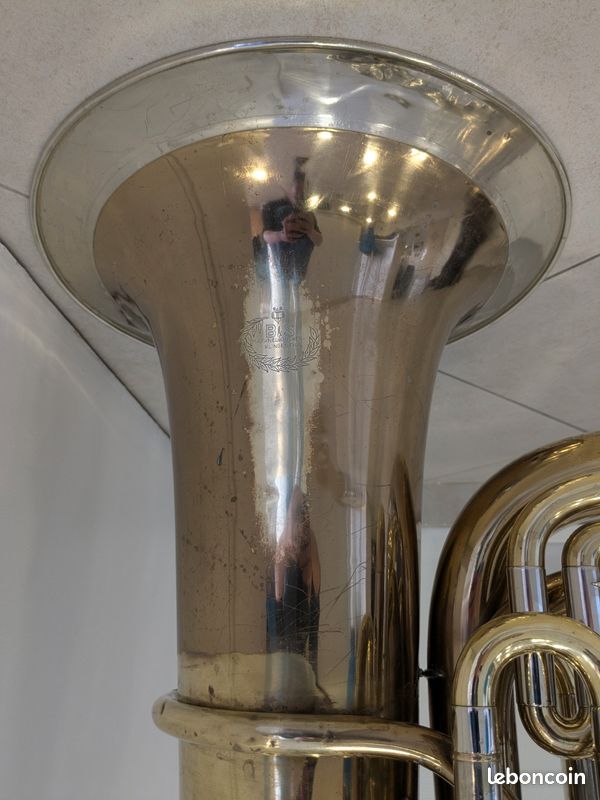
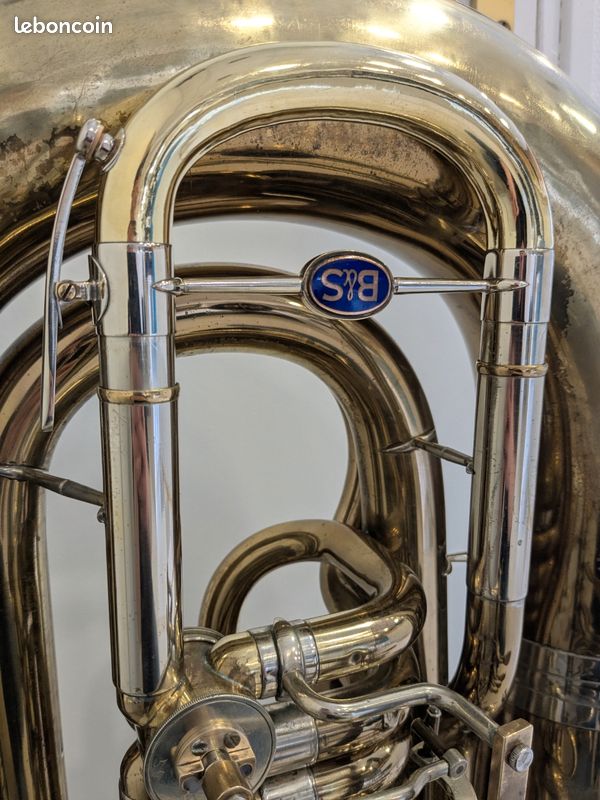
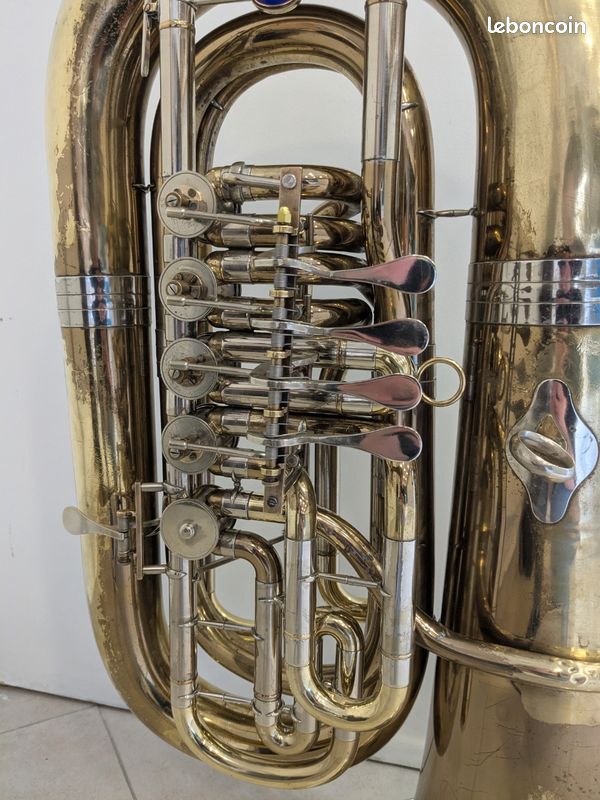
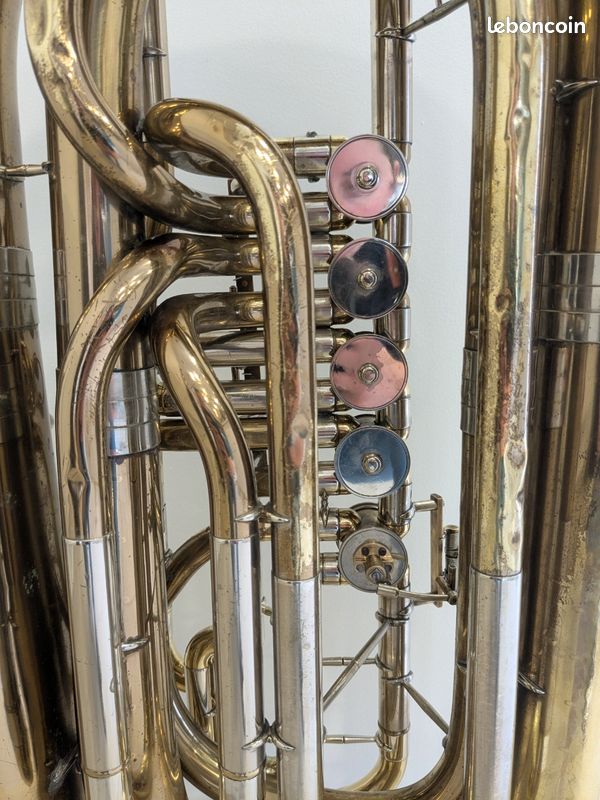
Identify B&S CC
Posted: Sat Feb 28, 2026 7:28 am
by claf
I saw
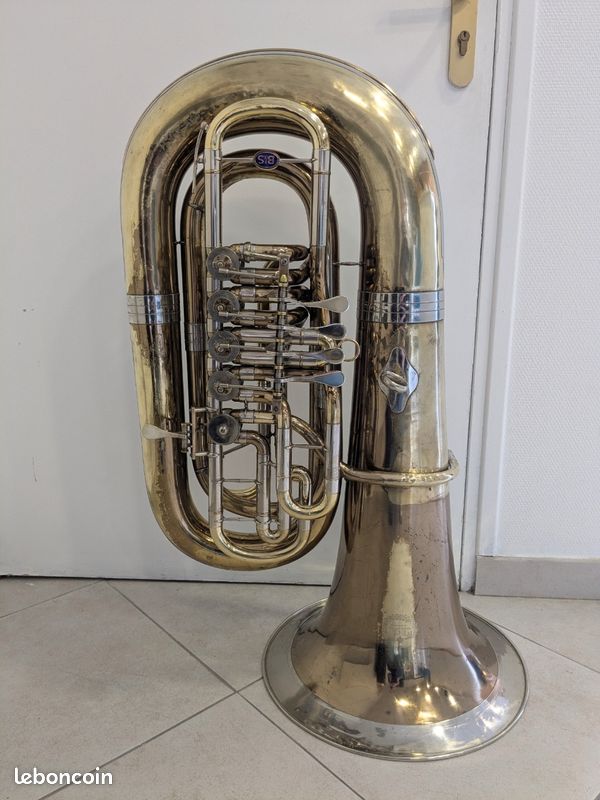
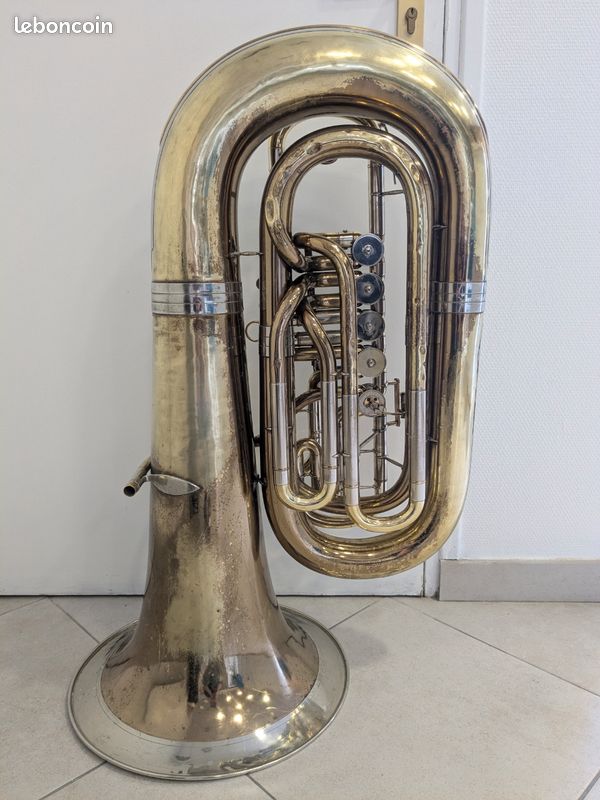
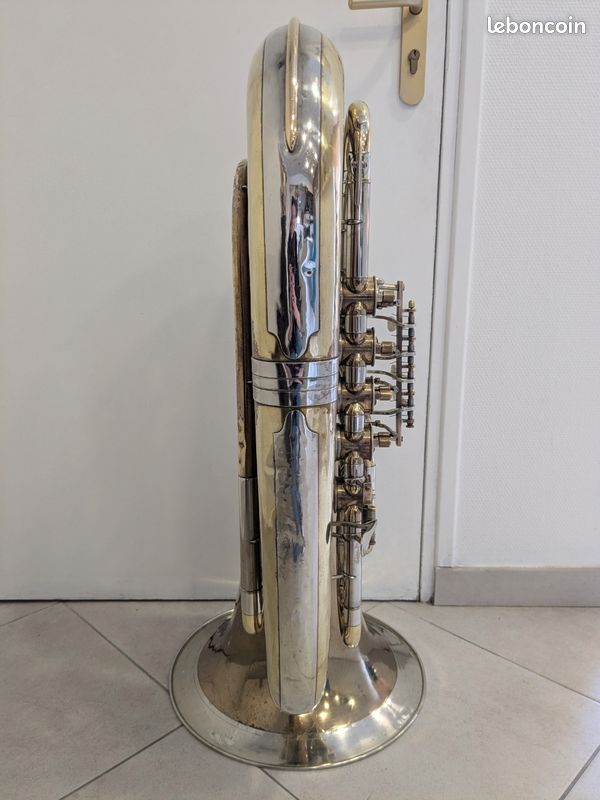
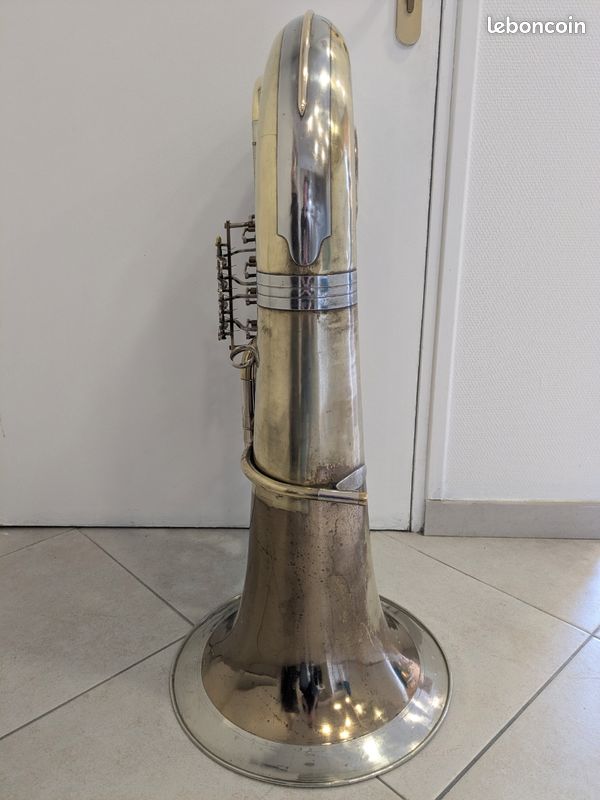
this instrument for sale.
Apparently 1980s 3/4 CC B&S tuba.
Any insight on the exact model? Is it any good?
Re: Identify B&S CC
Posted: Sat Feb 28, 2026 7:35 am
by prodigal
PT-4? Maybe?
Re: Identify B&S CC
Posted: Sat Feb 28, 2026 8:28 am
by PlayTheTuba
I thought that horn looks like a pt-3. Since it's a 3/4 CC, Considering the pt-3 used parts from a F tuba, like the bell.
Plus, that one looks old enough where it might have existed before the more tightly wrapped pt-4 . Ie the shorter more piggy like tuba styling, and not like the tall "Symphony CC" that B&S made.
https://www.tubaforum.net/viewtopic.php?t=3054
Of course, I could be wrong and the horns proportions in the photos might be throwing me off as well as the Garland on the bell.
Re: Identify B&S CC
Posted: Sat Feb 28, 2026 9:02 am
by daktx2
This is a funny one! It looks like either a PT3 or Symphonie 3/4 C tuba.
The Symphonie 3/4 C tuba almost always has a kranz, and has the F tuba / Symphonie valveset, which is conical (17-21mm) bore and has the 5th and 1st valves separated just like the Symphonie F tuba.
PT3s usually have no kranz, have the 5th and 1st valves next to each other, and have the PT valveset, with 19-21mm bore.
My guess is that this is an early PT3 with a Symphonie bell instead of the later PT kranzless bell.
Side note, the Symphonie 3/4 C tuba I played last year at Lee Stofer's shop was a blast, it had no apparent intonation problems and was super nimble / responsive. The PT3s I've played are still nimble, but not as good intonation wise, particularly around the top space G.
Re: Identify B&S CC
Posted: Sat Feb 28, 2026 9:21 am
by bloke
I can't get past the page that seems to be demanding that I accept cookies, but I can see a good bit of the first picture, and I think it's an old piggy style C Symphonie instrument.
If it's what I think it is, it features the same tapered bore valve section (C length circuits, obviously) as the F instrument by the same name.
Those instruments - as well all of the subsequent versions with wider bells and piston valves (PT this, that, and the other with very low numbers after PT) all seem to offer very curious intonation characteristics.
To me, one of those (assuming it's what I think it is, and if all the rotary valves are in virtually new condition) would be a good instrument to purchase as a donor instrument, in order to replace all the badly worn rotor assemblies on an F instrument of the same vintage and make, whereby someone wished to rebuild an F instrument with absolutely OEM type rotor assemblies made in the GDR, rather than post-unification rotor assemblies. (Those GDR rotors offer a remarkably light touch.
Re: Identify B&S CC
Posted: Sun Mar 01, 2026 1:42 am
by claf
Thank you for your answers.
It is still unclear of it is worth a try. Is it one of those "sweet tone, funky intonation" horns?
Would it be "too small" for a wind band?
Re: Identify B&S CC
Posted: Sun Mar 01, 2026 2:19 am
by claf
Re: Identify B&S CC
Posted: Mon Mar 02, 2026 12:58 am
by claf
@bloke those pictures were for you

Re: Identify B&S CC
Posted: Mon Mar 02, 2026 8:27 am
by bloke
Thank you very much for posting those.
I'm pretty sure it's a model I suspected it was.
Whether or not it has the factory brand's engraving, the "Symphonie" C.
I think it's sort of a piggy type thing, though only the fourth valve bore is as large as the bore on all the valves of the Czech version.
When one looks on a map - and particularly in context of the old Iron Curtain days - the B&S factory and the Cerveny factory locations are quite close, geographically.
I picked up one of those a really long time ago - probably in the early eBay days. Before receiving it, I had no idea how those play. It's not something that I would choose to keep for myself today nor back then, but Matt Walters continues to point out that every tuba has someone's name on it.
Re: Identify B&S CC
Posted: Mon Mar 02, 2026 10:09 am
by Snake Charmer
They are nice to play. Aim-shoot-hit and a big sound for the smallish looking horn. I played one of these (GDR made) about 30 years ago for a while, only with a different slide for the 5th valve, giving 2 whole steps. It was from a music school and they didn't want to sell
Re: Identify B&S CC
Posted: Tue Mar 03, 2026 1:16 pm
by claf
That sounds interesting.
If at some point I decide to go try it out, what key elements should I look for?
5th valve length? Bell thickness (for "too-much-buffing" issue)? Anything else?
Also, do you know what shank size it requires?
Re: Identify B&S CC
Posted: Tue Mar 03, 2026 3:41 pm
by Rick Denney
Jake (BerlinerTuba) wrote an article about the Bb Symphonie:
https://brassandpipes.wordpress.com/202 ... symphonie/ Other than being a Bb instead of a C, it looks very similar.
The braces tell me this one is 70's rather than 80's as with the one linked above, but the linkages are more like what they used in the late 80's (such as on my last-generation Symphonie F tuba). Maybe they were replaced at some point, or maybe the factory was building these with leftover parts and for some reason this one got some braces from the "look what I found!" box in the factory.
What makes this different from the 101/102 models, at least, was the graduated bore. It still has the Alexander-derived slide tubing arrangement used by B&S generally before the post-unification acquisition by JA-Musik.
Rick "betting it plays well if the valves are in good shape" Denney
Re: Identify B&S CC
Posted: Tue Mar 03, 2026 4:52 pm
by bloke
I tend to suspect that tubas made in that dirt floor preunification factory (I was never there, but Dan Perantoni described it to me, and I tend to trust his description) didn't follow stringent model year by year model alterations, as do most automobile manufacturers.
I can easily imagine that - when some supply of braces are temporarily exhausted, two or three tubas need to be finished to be shipped, and some previous style braces are found in a cardboard box (etc.), that there would have been no hesitation to install the previous style braces - often which were replaced with a newer style - as a somewhat more ornate previous style required more time and labor.
A new tuba - with consistent looking braces throughout - is a marketable new tuba. (I also remember Miraphone braces which used to be brass, later were brass with nickel-brass flanges, and eventually were completely made of nickel-brass...and the same goes for their slide tubing ... BFD.