Page 1 of 4
Solder and flux.
Posted: Fri Aug 28, 2026 6:43 pm
by jose the tuba player
I'm ready to reassemble my 21j.
Just wanted to see what everyone's preference was for solder and flux.
I was looking at buying 1lb of lead free but I'm unsure about what mixture.
Re: Solder and flux.
Posted: Fri Aug 28, 2026 7:36 pm
by the elephant
I detest lead-free solder. I only use 60/40 tin/lead solder and two or three different liquid fluxes (depending on what I am joining), with Johnson's being my choice for brass instruments. I am not crazy about it, but I bought a huge amount of the stuff from Allied back in the day, and will be dead and buried before I can ever use it up. (Whoops!)
If I have to solder things together in steps, I will use different grades, doing the initial work with 70/30, moving to secondary steps with 60/40 or 50/50. (70/30 is harder with a higher melting point. 50/50 melts before 70/30, so if you are *very* quick, you can tack something to an assembly after the fact, or add to something assembled by someone else to prevent your having to disassemble and clean it all up to solder it all again.) I try to assemble things all in one go and like the joint to be able to handle some abuse, so I usually do all the assembly in one go using 70/30, or 60/40 if there are a lot of joints or contact patches to do in a single run.
I am making this sound complex. It is not. I usually just grab the spool that is in my soldering box, regardless of the grade, and stretch it over a mandrel if it is too thick. I usually buy 1/16" rolls that are 1#. I seem to get by with that very well, but I *do* have the others, including flat tape solder that has proven to be handy perhaps five times in my life. (Yeah, that was a good use of my money…)
You can get this through Allied. Since you are not a shop, you can maybe (if you are *very* nice to them) get a local shop to buy them for you, but they will likely mark it up 100% (from wholesale to retail), which is normal.
I have never been able to find what I use in hardware or big-box home stores.
Use these in a well-ventilated room, meaning with an exhaust fan to the outdoors. Lead fumes suck, and flux fumes rust steel tools and corrode other stuff. And none of this is good for your lungs. I usually solder in my carport because I do not want to cut an 18" hole in my laundry room wall to install a proper exhaust fan.
Best of luck.
Wade
Re: Solder and flux.
Posted: Fri Aug 28, 2026 8:17 pm
by jose the tuba player
the elephant wrote: Fri Aug 28, 2026 7:36 pm
I detest lead-free solder. I only use 60/40 tin/lead solder and two or three different liquid fluxes (depending on what I am joining), with Johnson's being my choice for brass instruments. I am not crazy about it, but I bought a huge amount of the stuff from Allied back in the day, and will be dead and buried before I can ever use it up. (Whoops!)
If I have to solder things together in steps, I will use different grades, doing the initial work with 70/30, moving to secondary steps with 60/40 or 50/50.
(70/30 is harder with a higher melting point. 50/50 melts before 70/30, so if you are *very* quick, you can tack something to an assembly after the fact, or add to something assembled by someone else to prevent your having to disassemble and clean it all up to solder it all again.) I try to assemble things all in one go and like the joint to be able to handle some abuse, so I usually do all the assembly in one go using 70/30, or 60/40 if there are a lot of joints or contact patches to do in a single run.
I am making this sound complex. It is not. I usually just grab the spool that is in my soldering box, regardless of the grade, and stretch it over a mandrel if it is too thick. I usually buy 1/16" rolls that are 1#. I seem to get by with that very well, but I *do* have the others, including flat tape solder that has proven to be handy perhaps five times in my life. (Yeah, that was a good use of my money…)
You can get this through Allied. Since you are not a shop, you can maybe (if you are *very* nice to them) get a local shop to buy them for you, but they will likely mark it up 100% (from wholesale to retail), which is normal.
I have never been able to find what I use in hardware or big-box home stores.
Use these in a well-ventilated room, meaning with an exhaust fan to the outdoors. Lead fumes suck, and flux fumes rust steel tools and corrode other stuff. And none of this is good for your lungs. I usually solder in my carport because I do not want to cut an 18" hole in my laundry room wall to install a proper exhaust fan.
Best of luck.
Wade
Thanks for the reply Wade.
I was going to order solder from ferrees since they sell to anyone and don't collect tax and have reasonable handling fees. I thought it was me that sucked but it might have been my Amazon leadfree solder for electronics.
I wasn't aware of using different ones for tacking. I'll look into a variety but I'm trying to keep costs down since most of my money went to the dent machine.
What did you use for a torch? I'm using a propane one but I'm considering buying the attachments with the hose to be able to get where I need to.
I'm looking at these.
https://a.co/d/07hcGfoK
https://a.co/d/0cKAeK5F
https://a.co/d/0ga2Sjg2
Re: Solder and flux.
Posted: Fri Aug 28, 2026 9:14 pm
by the elephant
I like Uniweld or Goss handles with ten-foot hoses and single-dial regulators on acetylene "B tanks (40 cubic feet). I use #2 tips for just about everything when assembling, and a #4 for disassembly, or for assembling large stuff, like tuba bells to their ferrules.
Mine is like this one:


However, in the last few years I have been using one of those butane micro torches for small work. They work very well and get almost as hot as acetylene. But you have to refill them a lot. Good thing: the refills are available at most tobacco shops.

Re: Solder and flux.
Posted: Fri Aug 28, 2026 9:34 pm
by bloke
but Wade...
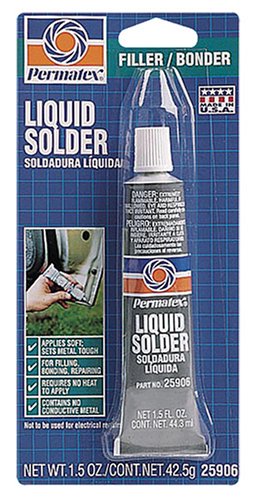
I'm just curious if you've ever tried this lead-free solder.
I checked into it, and AI tells me it doesn't burn lacquer.
Re: Solder and flux.
Posted: Fri Aug 28, 2026 11:56 pm
by gocsick
I use Ruby Fluid flux because my local ace carries it.. it seems to work exactly the same as Johnson's for me. I transfer it to a squeeze bottle with a needle tip. I also have a gel acid flux that I also got from the Ace and haven't had good luck with that.. it send to have a lower working range so it starts to burn off before the solder flows.
Solder.. I have a 1lb spool of 70/30 that I've had around for other projects from before I get interested in instrument work. Several trumpet build, middle school and high school quick repairs, and my 5th valve project on the Meinl Weston and I've hardly made a dent in. It is 1/8th of an inch so not the easiest to work with.. I do have a spool of 1/16th in 50/50 rosin core that I use for quick things like slide pull nubbies or rings etc... but the cleanup is extra work so I didn't use it on tubes or assembly.
Torches.. I have my old bernzomatic propane with adjustable flame that let's me get a wide area with a soft flame for big joints or around valve casings or other parts that act as heat sinks...where a more soaking heat is better... but most if the time I use my $10 harbor freight special butane kitchen torch. Really easy to control and you can put the heat right where you want it.
I am not the fastest learner... but one lesson I picked up quickly was "more flux and less solder". the second hard learned lesson was rushing to do it quickly means 5x the time in cleanup removing excess solder than if I just took and extra minute or two in the first place.
That permatex isn't really solder... they've renamed it liquid metal filler and it is basically a glue for temporary patches on metal.
Edit... Damnit I just realized Joe was... well being Joe.
Re: Solder and flux.
Posted: Sat Aug 29, 2026 1:33 am
by bloke
I'm ok with various lead-tin alloys, and seem to self-adjust to them without noticing.
The band instrument repair industry suppliers charge too damn much for any of it, and some have stopped selling it.
I found a SOLDER supplier (to hell with the band instruments supplies places) that sold me a 5-lb. spool of 50/50 for a (post hyperinflationary economic shutdown era) "reasonable" price.
So far, I've sloppily reeled off (probably less than) a pound of it onto an empty 1-lb.-accommodating spool. I've fixed a bunch of horns with that reeled off amount, and most of it seems to still be there. (I don't waste very much...You won't see much on the floor of my shop, UNLESS, I'm taking APART some big ol tuba, etc.)
People would be horrified by the torches I use, but - again - Ii seem to self-adjust to them as well.
Ok...I use a Bernzomatic 8000 screw-on nozzle. It has a click start, and flow adjusts from "just enough to heat stuck slide tubes after spraying them with penetrating oil" up to "silver brazing and beyond". It comes with three nozzles...I only use the plain-jane one. I refill 14 oz. "camping" (dark green) Bernzomatic propane (supposed to be "disposable") canisters from my barbecue grill's propane tank (with a cheap Chinese hose with fittings - probably dangerous as the dickens). I've found that I can refill them a dozen times or so until they "play out" (somehow, the outflow becomes too restricted after refilling them a whole bunch of times) and then I toss out one that has "played out" and refill another a bunch of times. Yeah...the flame isn't as concentrated (again, I seem to adapt), but I'm not constrained by a hose, and can sit in my chair, prop up stuff at goofy angles, and solder stuff up...(I'm pretty fast using this crappy equipment, though. I went out there sorta late and repaired a couple of "customized" marching instruments (for that AAAAA nationally 16th-ranked high school) tonight...They're silver plated, I didn't waste solder, I didn't ruin their finishes, and I even emailed them their bill and told them to come get 'em. (I was restless, just as I am now.)
I use the watery flux mentioned above, either/any brand, but the clear water-consistency flux. I put a few drops at a time (as
@gocsick has seen) in a lid from a discarded rattle-can of spray paint, and apply with cotton swabs. They last a day or two, I do my amazing "flying swab 12-feet across the room into the small trash can" trick, and grab another new swab.
I don't recommend doing as I do. Buy the cool stuff, and (not being a smart@$$, but actually suspecting more ease with better equipment) stimulate the economy. Buy AMERICAN (brands like Harris et al), and REALLY stimulate the economy !


OK...PLUMBING solder (c. 1/2% to 2% silver) ...mostly tin, with bismuth, antimony, and silver...
It doesn't flow very well, which can be used to an advantage. If a silver plated instrument has some ugly cracks (whereby brazing them with silver solder would melt/sublimate the silver plating, and lead-soldered patches would look like $h!t) that stuff works fairly well when spanning cracks. It's not "strong", but it WILL ACTUALLY last for DECADES (if no one is rough and f's it up - ie. "continually adult-handled, henceforth"). Also...stuff like old silver sousaphones that have "had it" (should be thrown in the scrap brass...old worn pistons and casings, red-rot, and big-ol' spider cracks in the outer branches)...that plumbing solder can be used to "chase" through body cracks (due to metal fatigue - whereby young scholars have mashed in those body branches countless times, and repair-hosslers have straightened those body branches back out - also countless times).
admission:
I've used plumbing solder to to routine repair work (soldering braces, even soldering sousaphones completely back together, etc.) when I was so damn lazy that I failed to order lead-tin solder before I ran out. The plumbing solder "works", but (as Wade hinted) it has to be dealt with in a different way...yeah...annoying, but better than not getting my work done. (Another way that I've obtained emergency replacement lead-tin solder has been to knock on some really old man's door - truth - ask if I can look through their old plumbing stuff: rounded metal box with their propane torch and solder - and - sure-enough, they have some - though it's always the bulky 1/8th inch diameter, but better than modern plumbing bismuth/antimony/silver solder).
Re: Solder and flux.
Posted: Sat Aug 29, 2026 10:08 am
by ghmerrill
If I'm being serious, I use an outfit with a B acetylene tank and a Goss air/acetylene torch. I generally use 60/40 lead solder (if silver solder isn't required) and LLoyd's #6 soldering fluid (which I got from Votaw ages ago).
But if it's not something "serious" I use the little Bernzomatic butane torch that my wife otherwise uses for lighting fires in the wood stove.

You can get a long way with the butane torch and not have to break out the acetylene outfit.
The line between "serious" and "not serious" is a little blurry, and there are times where I've started with the butane torch and then thought better of it and switched to the acetylene outfit. But it's not worth going the acetylene route if I'm just doing something like swapping a leadpipe nut on a trombone leadpipe, etc.
In terms of lead vs. led-free solder, I remain firmly unconvinced (because of the lack of genuine empirical evidence, and some genuine evidence to the contrary) that there is any health or safety benefit to using non-lead vs.lead solder. But people will make their own choices on this for a variety of reasons.
Re: Solder and flux.
Posted: Sat Aug 29, 2026 11:56 am
by the elephant
I currently have two handles: the Uniweld I showed above, and a Goss that is nearly identical, save for the knob shape and the color of the plastic grips. I like both, and despite what the Uniweld dealer told me, the tips are interchangeable. I have the Goss set up with the #4 tip and the Uniweld with the #2, which saves me time. Of course, two tanks take up a lot of room, and I find myself using acetylene less and less. I may stop when these run out, as most homeowners' policies do not cover damage from an explosion in the event of a house fire. If the firemen or adjuster find evidence of a B tank or larger, you're on your own, baby…
Re: Solder and flux.
Posted: Sat Aug 29, 2026 1:07 pm
by bloke
I actually have a good acetylene outfit, but it just stays in its case.
Maybe (??) I'm analogous to the tuba player who does just fine with a 24AW...(I suppose that depends on whether people think I'm doing "just fine" or not...??)
Admittedly, I usually even try to avoid using securing wires on most stuff, and try to use gravity and (in the heating process) move the flame around so is to not coax the piece being soldered on (particularly if it's something small like a pull nib or a water key saddle) off onto the floor.
I don't know about the rest of you, but I apply flux at the beginning, sort of burn that flux off, and then add some more when I've got the two surfaces heated up close to soldering temperature, because that's when flux is really active and doing what it needs to do.
I'm sure some of you have also figured out that when you're soldering on a brace flange, the center often (usually) doesn't get soldered (which greatly weakens the strength of the brace, because the center is the part that's actually doing the job of spanning over to the other part). When I'm not in a terrible hurry trying to get through 16 million School repairs in one day, I will "tin" the center of a either a solid brace flange or a socket brace flange with solder, and the first place I will heat when soldering the flange is either the socket or the center post. (Again, when I'm blasting through a bunch of instruments that are all torn up and just trying to get them back together, I don't do this. Otherwise people wouldn't get their stuff back in time - in order that they can tear it right back up.)
Re: Solder and flux.
Posted: Sat Aug 29, 2026 1:41 pm
by the elephant
Same here to all of that. But then, I only do stuff for myself and do not have to be fast. I do a lot of tedious repair stuff tediously.
Re: Solder and flux.
Posted: Wed Sep 02, 2026 6:30 pm
by jose the tuba player
I ordered a uniweld torch kit to try out this weekend.
Do you guys strip the lacquer before or after torch work?
Re: Solder and flux.
Posted: Wed Sep 02, 2026 7:58 pm
by the elephant
Strip just around the work. Try not to blacken the edge of the remaining lacquer, as it is a PITA to clean up.
Re: Solder and flux.
Posted: Wed Sep 02, 2026 9:12 pm
by bloke
the elephant wrote: Wed Sep 02, 2026 7:58 pm
Strip just around the work. Try not to blacken the edge of the remaining lacquer, as it is a PITA to clean up.
Sanding sticks are pretty cute...
Re: Solder and flux.
Posted: Thu Sep 03, 2026 8:05 am
by gocsick
It isn't a process that would make sense where productivity counts, but I found a brass wheel in a Dremel at low speed (the max rpm is printed on the package the brushes come in) does a good job of either stripping the lacquer before or easily removing the blackened lacquer after... plus it burnished the brass/nickel silver removing any scraper scratches or sanding marks from cleaning up my less than perfect soldering job.
Wear a mask so you don't inhale lead dust.
Of course it would be faster if I was just a little in neater with soldering in the first place.
Re: Solder and flux.
Posted: Thu Sep 03, 2026 8:16 am
by arpthark
gocsick wrote: Thu Sep 03, 2026 8:05 am
It isn't a process that would make sense where productivity counts, but I found a brass wheel in a Dremel at low speed (the max rpm is printed on the package the brushes come in) does a good job of either stripping the lacquer before or easily removing the blackened lacquer after... plus it burnished the brass/nickel silver removing any scraper scratches or sanding marks from cleaning up my less than perfect soldering job.
Wear a mask so you don't inhale lead dust.
Of course it would be faster if I was just a little in neater with soldering in the first place.
Same here, I use a Dremel all the time for little things like that.
Mask? Well, I try to hold my breath...
Re: Solder and flux.
Posted: Thu Sep 03, 2026 1:45 pm
by ghmerrill
the elephant wrote: Sat Aug 29, 2026 11:56 am
... most homeowners' policies do not cover damage from an explosion in the event of a house fire. If the firemen or adjuster find evidence of a B tank or larger, you're on your own, baby…
Hmmm, ..., I hadn't thought about this ... but maybe my wife did when she got our insurance policy. As it turns out, we appear to be covered (under the usual clauses concerning "named perils"), and I am definitely not in violation of any safety or storage codes. Similarly, I don't worry about not being covered in case of garage fire which might cause an explosion of either the 200 lb. propane tank beside the garage that powers my space heater or the 250 gal. tank sitting beside the garage that powers our whole-house generator.
More generally, so far as I can see, homeowners' policies do cover damage from an explosion. Lot's of explosions happen in houses that catch fire and which have propane or natural gas heat. "Explosion" is one of the "named perils" explicitly covered in a homeowners policy (such as the common HO-3 type policy).
Re: Solder and flux.
Posted: Thu Sep 03, 2026 3:15 pm
by the elephant
If you use the acetylene tank for commercial work, your claim will be denied nearly every time. Personal use—to which I do not strictly adhere—is okay. Some people in this thread do this for money or might want to one day.
Just passing on some little-known information.
This discovery is why I have been migrating to the butane micro torches. I am trying to learn to silver-solder with them (so far with pretty good success) and to rip tuba bells from or adhere them to their big-a$$ ferrules (not yet successful, but still trying).
Re: Solder and flux.
Posted: Fri Sep 04, 2026 5:33 am
by ghmerrill
the elephant wrote: Thu Sep 03, 2026 3:15 pm
I am trying to learn to silver-solder with them (so far with pretty good success) and to rip tuba bells from or adhere them to their big-a$$ ferrules (not yet successful, but still trying).
That may be a difficult row to hoe. There are a couple of alternatives (particularly for silver soldering -- not so good for lead) that might be considered: oxy-propane and oxy-hydrogen (HHO). The HHO seems more attractive, controllable, and versatile. They're often used by professional jewelers. Some years ago I almost made an HHO outfit just for grins, but decided it was a lot of effort for something I didn't need for very infrequent applications.
The common HHO outfits are pretty expensive ($3,000-$6,000). I see that there are inexpensive ($150-$400) (mostly Chinese?) HHO outfits available, but I don't know what the issues with those might be (I think that some safety features might be a bit iffy).
Re: Solder and flux.
Posted: Fri Sep 04, 2026 5:49 am
by arpthark
I silver solder with a regular $7 bottle of propane and the torch head I use for everything else on a heat sink I made out of patio stones. Is there a benefit to the acetylene? I have an acetylene setup but never really use it. I took it off the hands of a repairman who was retiring and I’ve messed with it a few times but not enough to bear any measurable results. I suppose the flame is smaller which can be useful.