Eastman 832 (4/4 C tuba) and then - wandering off-topic to stuff I just did to my 4/4 Holton B-flat

Tubas, euphoniums, mouthpieces, and anything music-related.
Forum rules
This section is for posts that are directly related to performance, performers, or equipment. Social issues are allowed, as long as they are directly related to those categories. If you see a post that you cannot respond to with respect and courtesy, we ask that you do not respond at all.
Post Reply
User avatar
bloke
Mid South Music
Posts: 24875
Joined: Thu Aug 13, 2020 8:55 am
Location: western Tennessee - near Memphis
Has thanked: 5274 times
Been thanked: 6034 times

Eastman 832 (4/4 C tuba) and then - wandering off-topic to stuff I just did to my 4/4 Holton B-flat

Post by bloke »

OK...
I end up playing a bunch of models of tubas, because people drive to me to repair them.
bloke is a "tuba repair specialist", because he plays the tuba for side money.
:eyes: OK...whatever...fine...tuba repairs pay as much per hour as trumpet and trombone repairs (as I make certain that they do).


I finally played an Eastman 832 today (vs. a 632).
I played it for a very short time, but long enough to form the opinion that (if someone is in the market for one of these factory C versions of King B-flat tubas) the 832 is worth the additional cost (vs. the 632).

an issue (but only barely worth mentioning)...
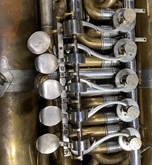
Eastman doesn't seem particularly interested in the rotor being user-serviced. I got it out, but (as far as laymen are concerned) I sorta doubt that many of the owners/users would quickly be able to contrive a way to safely remove the rotor body. It's just that - rather than 10 seconds - it took me "a minute" to get it out...but it required just a little bit of analysis.
Hey...I actually DID think of a pretty easy "owner/user" way to get it out, if anyone is interested.

something else:
For those who view Mississippians as a bunch of country bumpkins...
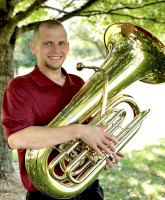
This owner (an Ole Miss student who is NOT a music major) plays VERY well, knows (and executes very well) some key excerpts as well as some of the more well-known solo lit.
I just like the tuba, and I play in the marching band, the concert band (for scholarship money), and take private lessons as electives.
Not to say much more (as I'm sorta interested in Mississippi continuing to be mostly occupied by Mississippians), but Mississippi ranks 16th in the nation for overall K-12 education.
:thumbsup:

Also (obviously, a former B-flat player as were most all college-aged C players) this young person played all of my instruments, and remarked that my Holton (4/4 B-flat) played as easily/securely/with as much facility as his 832 C (again: a very good instrument). He also remarked that (at one of the "XXXTEC" tuba shindigs recently - which he reported had a BUNCH of tubas on display) my Holton is a more approachable B-flat than any of the B-flats he played in that elephant room (but I already knew that would be the case).

specifically, this one...which is actually a couple of inches shorter (and only 19-inch bell) in comparison to his 832 C.

Image

OK...INTO THE OTHER TOPIC:

YET I also felt (UNTIL YESTERDAY) that this Holton (valveset bore - 11/16" / 5th rotor bore 3/4" / height: 32" / bell diameter: 19") - though a wonderful tuba...
- played slightly too "open" (slightly)
- the playing position was too much like the CSO-York-style 6/4 C tubas (a bit uncomfortable...too sideways)

I scrounged through a bunch of receivers, and found a crazy-long-AND-stupid-design STANDARD SHANK receiver as (until yesterday) I had a much shorter EURO receiver mounted on this tuba.
The "stupid" one (now the NEW one - pictured below) featured interior dimensions which were too small in every respect, so it was ideal for alteration, as the only issue was to TAKE AWAY brass that I didn't want to be in there. :smilie8:

The tuba is now roughly 3/4" longer, but (guess what) with the smaller choke point diameter, the main tuning slide remains in the same position. :bugeyes:

I REALLY like this change. Again: I always seem to be REALLY lucky - both in building stuff and in messing with stuff. :smilie7:
receiver blather.png
receiver blather.png (66.03 KiB) Viewed 2609 times

User avatar
russiantuba
Posts: 847
Joined: Thu Aug 13, 2020 8:04 am
Location: Circleville, Ohio
Has thanked: 69 times
Been thanked: 339 times
Contact:

Re: Eastman 832 (4/4 C tuba) and then - wandering off-topic to stuff I just did to my 4/4 Holton B-flat

Post by russiantuba »

As for the 832, I think one of the biggest issues I had with it was the bore was quite small for the rate of taper. I think if they would have put a larger bore on it, it would have been a better horn. I spent a bit of time on an 832 a couple years ago after hearing all the hype, and thought it was just a "beta" and could use a bit more R&D. It was better than the 632--but then again, I feel the Conn 52/54J were way better than the 632 (and it doesn't help the guy who designed those horn and knows all the tensions of the bracing and such is my repair tech, so the majority of those horns I have played are some of the top playing ones out there.

I don't require CC for my college students, and especially my music education students, I prefer them to stay on BBb. I personally think there is still a stigma that "CC tubas are better than BBb tubas" and because of this, people who have no intention in majoring in music just buy a CC. I think my undergraduate professor wanted me to play very good BBbs before going to CC, but I was young, and exhibitors often bring their best CCs to TMEA in those ages and BBbs I already knew. It is also easier if one wants to travel with groups (brass bands, orchestras, polka groups, contemporary music ensembles) to find a good BBb to rent anywhere in the world.
Dr. James M. Green
Lecturer in Music--Ohio Northern University
Adjunct Professor of Music--Ohio Christian University
Gronitz PF 125
Miraphone 1291CC
Miraphone Performing Artist
www.russiantuba.com
User avatar
bloke
Mid South Music
Posts: 24875
Joined: Thu Aug 13, 2020 8:55 am
Location: western Tennessee - near Memphis
Has thanked: 5274 times
Been thanked: 6034 times

Re: Eastman 832 (4/4 C tuba) and then - wandering off-topic to stuff I just did to my 4/4 Holton B-flat

Post by bloke »

russiantuba wrote: Tue Jun 02, 2026 8:43 pm As for the 832, I think one of the biggest issues I had with it was the bore was quite small for the rate of taper. I think if they would have put a larger bore on it, it would have been a better horn. I spent a bit of time on an 832 a couple years ago after hearing all the hype, and thought it was just a "beta" and could use a bit more R&D. It was better than the 632--but then again, I feel the Conn 52/54J were way better than the 632 (and it doesn't help the guy who designed those horn and knows all the tensions of the bracing and such is my repair tech, so the majority of those horns I have played are some of the top playing ones out there.

I don't require CC for my college students, and especially my music education students, I prefer them to stay on BBb. I personally think there is still a stigma that "CC tubas are better than BBb tubas" and because of this, people who have no intention in majoring in music just buy a CC. I think my undergraduate professor wanted me to play very good BBbs before going to CC, but I was young, and exhibitors often bring their best CCs to TMEA in those ages and BBbs I already knew. It is also easier if one wants to travel with groups (brass bands, orchestras, polka groups, contemporary music ensembles) to find a good BBb to rent anywhere in the world.
Possibly (??) agreeing with you (but in an opposite way), I believe the slightly-smaller Holton/York 4/4 body size is more suited for the 11/16" bore than is the slightly-larger B-flat-and-C King body size.

That said, most any tuba needs to be played in the specific way that particular tuba needs to be played - in order to achieve optimum results with a particular tuba. We really can't super-impose our 5/4 or 6/4 playing ways onto a 4/4 tuba (and certainly not onto/into a truly German-style F tuba) and expect the 4/4 tuba to perform optimally (and vice-versa). ...yeah...I remember the first time I played a Holton (6/4) 345 C tuba...I felt very strange (as - being a kid - the only way I knew to play a tubas was "as if it's a 186", and my single way of knowing how to make a tuba "go" simply did not work with a Holton 345.
gocsick
Posts: 1104
Joined: Mon Sep 11, 2023 11:12 am
Has thanked: 468 times
Been thanked: 527 times

Re: Eastman 832 (4/4 C tuba) and then - wandering off-topic to stuff I just did to my 4/4 Holton B-flat

Post by gocsick »

I have a small gear puller that I thought would be perfect for popping the rotor on the 832. When I played one at Dillon, and saw the design, I wondered how on earth do you repair runout or endplay from someone not maintaining it well.. Unless I am missing something on the design.. how do you properly oil the bottom bearing without removal?
These users thanked the author gocsick for the post:
bloke (Wed Jun 03, 2026 8:57 am)
As amateur as they come...I know just enough to be dangerous.

Meinl-Weston 20
Holton Medium Eb 3+1
Holton Collegiate Sousas in Eb and BBb
Conn 20J
and whole bunch of other "Stuff"
User avatar
arpthark
Posts: 5988
Joined: Mon Aug 24, 2020 4:25 pm
Has thanked: 1883 times
Been thanked: 2034 times

Re: Eastman 832 (4/4 C tuba) and then - wandering off-topic to stuff I just did to my 4/4 Holton B-flat

Post by arpthark »

I loved my 832. It played so wonderfully in tune and was so easy across all registers. I was so lucky to get it as a demo model from Dillon's before the prices shot up. I walked out the door with it to the tune of $4800 or something like that. It was my first real tuba after not having played in hardly any capacity for the three previous years. I had the guy I was studying repair with add some water keys for better drainage on the 4th and 3rd valve circuits as well.

I agree with James that the bore felt just a little restrictive to me as I grew into it, and I've always sort of preferred rotors, so I ended up selling it to some college student in Utah and branched out into other horns. Through a series of trades, it basically turned into my Symphonie F. But it was without a doubt one of the most well in-tune CC tubas I had ever owned (maybe with the exception of the Mack 410 CC Miraphone copy, which is oddly/incredibly in tune with itself).
User avatar
bloke
Mid South Music
Posts: 24875
Joined: Thu Aug 13, 2020 8:55 am
Location: western Tennessee - near Memphis
Has thanked: 5274 times
Been thanked: 6034 times

Re: Eastman 832 (4/4 C tuba) and then - wandering off-topic to stuff I just did to my 4/4 Holton B-flat

Post by bloke »

The two of you who feel like it could have used a slightly larger bore, seems like the only other choice these days is 19mm/.750"/3/4"...

...yet a few instruments have been made in the past with a .709" bore, and two or three makes of sousaphones with a .728" bore.

(These are metric sizes, though expressed in inches.)

The Buescher and Selmer sousaphones and tubas were .726"

I wonder if the intonation characteristics might have wandered off the mark with one of these larger bore sizes.
User avatar
arpthark
Posts: 5988
Joined: Mon Aug 24, 2020 4:25 pm
Has thanked: 1883 times
Been thanked: 2034 times

Re: Eastman 832 (4/4 C tuba) and then - wandering off-topic to stuff I just did to my 4/4 Holton B-flat

Post by arpthark »

bloke wrote: Wed Jun 03, 2026 9:02 am I wonder if the intonation characteristics might have wandered off the mark with one of these larger bore sizes.
From what I understand, the demo models of the 834 essentially took the 832 body grafted to a .748" bore valveset, and the results were bad, intonation-wise.

It makes me think of the early, pre-WW2 King 1240 BBb. They had two models, the common .687" bore that they still use today, and a model with the larger .750" bore. This was the variation where the main tuning slide came before the valves, and the rate of taper that the mouthpipe and main tuning slide underwent completely threw off the intonation on the .750" bore model. I owned the larger bore variant, saggy 3rd and 5th partials.
These users thanked the author arpthark for the post:
bloke (Wed Jun 03, 2026 9:24 am)
User avatar
bloke
Mid South Music
Posts: 24875
Joined: Thu Aug 13, 2020 8:55 am
Location: western Tennessee - near Memphis
Has thanked: 5274 times
Been thanked: 6034 times

Re: Eastman 832 (4/4 C tuba) and then - wandering off-topic to stuff I just did to my 4/4 Holton B-flat

Post by bloke »

Long prior to some of the knowledge that has been gained in the last decade or two, I was told by people who visited European factories (and I sort of suspect that those Americans were under the wrong impression, and misreported) - that Europeans referred to the valve section as their languages' version of "the machine" l, and that manufacturers tended to dismiss the acoustical properties of a chosen bore size.

That said, I suspect that those Americans were under the wrong impression, and some of this "lack of giving Europeans credit for the knowledge and abilities that they held" may have been even left over from anti-European continental European WWII sentiments (as I'm old enough whereby I recall these comments coming out of the mouths of older Americans quite a few years ago).

hey...
It's the European made instruments that have become better and better over the decades, whereas American instruments aren't even made anymore. 😐
User avatar
bloke
Mid South Music
Posts: 24875
Joined: Thu Aug 13, 2020 8:55 am
Location: western Tennessee - near Memphis
Has thanked: 5274 times
Been thanked: 6034 times

Re: Eastman 832 (4/4 C tuba) and then - wandering off-topic to stuff I just did to my 4/4 Holton B-flat

Post by bloke »

I'm waiting for someone to make a straight-up copy of a 19-inch bell / 32-inch-tall 4/4 York (bell and bugle - with a modern found section of whatever it seems to be the optimum bore size) without PRE-chopping it to C...

... and with pre-war gauge slightly heavier bell sheet metal, rather than the thin gauge bell sheet metal that King used in its last years, and which Eastman seems to have copied (resulting in nearly automatic circular creases a couple of inches away from the bell rim).

A few parts - comparing York and King : are just about identical, including the bottom bow, and the final smallest top bow, but the overall slightly smaller size of the York 4/4 is a handier size and sonically tends to offer a little bit more clarity and (very scientific word) "snap".

Carl and others believe that Getzen messed up a C version copy of the York 4/4 bell & body on the front end (mouth pipe). Okay. Someone doesn't need to copy the weird stuff that the guy in Milwaukee did with his cut-down (out of expediency?) and could give it another shot. Lee has put together two or three, but I'm talking about manufacturing, and not near one-offs...
and including (for pity's sake) some B-flats (which would offer more resonance).
tubanh84
Posts: 457
Joined: Thu Aug 13, 2020 8:12 am
Has thanked: 68 times
Been thanked: 228 times

Re: Eastman 832 (4/4 C tuba) and then - wandering off-topic to stuff I just did to my 4/4 Holton B-flat

Post by tubanh84 »

bloke wrote: Wed Jun 03, 2026 9:02 am The two of you who feel like it could have used a slightly larger bore, seems like the only other choice these days is 19mm/.750"/3/4"...

...yet a few instruments have been made in the past with a .709" bore, and two or three makes of sousaphones with a .728" bore.

(These are metric sizes, though expressed in inches.)

The Buescher and Selmer sousaphones and tubas were .726"

I wonder if the intonation characteristics might have wandered off the mark with one of these larger bore sizes.
Caveat: I am not an instrument repair expert in the least. But I'm a competent player, and I've played a lot of horns.

Second caveat: I'm agreeing with you. Just responding to your point on intonation.

I have never played a .7+" bore CC that has anywhere near as good intonation as EVERY .689 bore CC I've played. I think the bore is perfect for that length of tube. Based on my own playing experience on the 632 and 832, I would never put a larger bore on them. The 832 especially was point and shoot. With the Mike Finn H in it (my go-to for American-style tubas), it had a huge, punchy sound that would have worked in any orchestra. No, they aren't 6/4 instruments, but they never will be. At some point, no 4/4 will have the breadth of sound as a 6/4, and they are so good with the .689" bore that it's not worth changing them.

Having said that, I'd love to throw a .689" bore on a 6/4 York-o-phone and see what happens.
User avatar
UncleBeer
Posts: 702
Joined: Thu Aug 13, 2020 8:37 am
Has thanked: 117 times
Been thanked: 461 times

Re: Eastman 832 (4/4 C tuba) and then - wandering off-topic to stuff I just did to my 4/4 Holton B-flat

Post by UncleBeer »

bloke wrote: Wed Jun 03, 2026 10:03 am Lee has put together two or three
According to his company page, he's finishing #11 right now, but that might be out of date.
These users thanked the author UncleBeer for the post (total 2):
bloke (Wed Jun 03, 2026 5:19 pm) • MN_TimTuba (Wed Jun 03, 2026 8:35 pm)
User avatar
arpthark
Posts: 5988
Joined: Mon Aug 24, 2020 4:25 pm
Has thanked: 1883 times
Been thanked: 2034 times

Re: Eastman 832 (4/4 C tuba) and then - wandering off-topic to stuff I just did to my 4/4 Holton B-flat

Post by arpthark »

tubanh84 wrote: Wed Jun 03, 2026 1:47 pm
bloke wrote: Wed Jun 03, 2026 9:02 am The two of you who feel like it could have used a slightly larger bore, seems like the only other choice these days is 19mm/.750"/3/4"...

...yet a few instruments have been made in the past with a .709" bore, and two or three makes of sousaphones with a .728" bore.

(These are metric sizes, though expressed in inches.)

The Buescher and Selmer sousaphones and tubas were .726"

I wonder if the intonation characteristics might have wandered off the mark with one of these larger bore sizes.
Caveat: I am not an instrument repair expert in the least. But I'm a competent player, and I've played a lot of horns.

Second caveat: I'm agreeing with you. Just responding to your point on intonation.

I have never played a .7+" bore CC that has anywhere near as good intonation as EVERY .689 bore CC I've played. I think the bore is perfect for that length of tube. Based on my own playing experience on the 632 and 832, I would never put a larger bore on them. The 832 especially was point and shoot. With the Mike Finn H in it (my go-to for American-style tubas), it had a huge, punchy sound that would have worked in any orchestra. No, they aren't 6/4 instruments, but they never will be. At some point, no 4/4 will have the breadth of sound as a 6/4, and they are so good with the .689" bore that it's not worth changing them.

Having said that, I'd love to throw a .689" bore on a 6/4 York-o-phone and see what happens.
I think it was you that actually clued me in to that 832 at Dillon's. I was really happy with it for the two years I owned it.
User avatar
bloke
Mid South Music
Posts: 24875
Joined: Thu Aug 13, 2020 8:55 am
Location: western Tennessee - near Memphis
Has thanked: 5274 times
Been thanked: 6034 times

Re: Eastman 832 (4/4 C tuba) and then - wandering off-topic to stuff I just did to my 4/4 Holton B-flat

Post by bloke »

That's a bunch of hybrid Getzen G-50s :bugeyes: ...and how great for Lee and the purchasers... :smilie8: :thumbsup: but not "production"
User avatar
russiantuba
Posts: 847
Joined: Thu Aug 13, 2020 8:04 am
Location: Circleville, Ohio
Has thanked: 69 times
Been thanked: 339 times
Contact:

Re: Eastman 832 (4/4 C tuba) and then - wandering off-topic to stuff I just did to my 4/4 Holton B-flat

Post by russiantuba »

bloke wrote: Wed Jun 03, 2026 10:03 am I'm waiting for someone to make a straight-up copy of a 19-inch bell / 32-inch-tall 4/4 York (bell and bugle - with a modern found section of whatever it seems to be the optimum bore size) without PRE-chopping it to C...

... and with pre-war gauge slightly heavier bell sheet metal, rather than the thin gauge bell sheet metal that King used in its last years, and which Eastman seems to have copied (resulting in nearly automatic circular creases a couple of inches away from the bell rim).

A few parts - comparing York and King : are just about identical, including the bottom bow, and the final smallest top bow, but the overall slightly smaller size of the York 4/4 is a handier size and sonically tends to offer a little bit more clarity and (very scientific word) "snap".

Carl and others believe that Getzen messed up a C version copy of the York 4/4 bell & body on the front end (mouth pipe). Okay. Someone doesn't need to copy the weird stuff that the guy in Milwaukee did with his cut-down (out of expediency?) and could give it another shot. Lee has put together two or three, but I'm talking about manufacturing, and not near one-offs...
and including (for pity's sake) some B-flats (which would offer more resonance).
Jim Akins owned two of the original 4/4 York CC tubas that were designed by York originally in CC. These were made about a decade before the 6/4 and were done by the factory and not cut down. I think he said 11 total were made. The first one belonged to Bob Leblanc. I played quite a bit on the second one and it’s an amazing horn.

Kalison made a copy under Jim’s supervision, 11 total were made before Kalison ceased operations.

I’ve always had a problem with cut horns and tonal inconsistencies and have played cut down York horns. The best one I’ve played was Rich Watson’s Rusk cut F tuba, but I could tell and feel that it didn’t feel like an F (felt like an Eb). Jim’s York 4/4 didn’t have this (and I’ve played a couple York 4/4 CCs that were cut down over the years).
Dr. James M. Green
Lecturer in Music--Ohio Northern University
Adjunct Professor of Music--Ohio Christian University
Gronitz PF 125
Miraphone 1291CC
Miraphone Performing Artist
www.russiantuba.com
User avatar
bloke
Mid South Music
Posts: 24875
Joined: Thu Aug 13, 2020 8:55 am
Location: western Tennessee - near Memphis
Has thanked: 5274 times
Been thanked: 6034 times

Re: Eastman 832 (4/4 C tuba) and then - wandering off-topic to stuff I just did to my 4/4 Holton B-flat

Post by bloke »

russiantuba wrote: Wed Jun 03, 2026 5:22 pm
bloke wrote: Wed Jun 03, 2026 10:03 am I'm waiting for someone to make a straight-up copy of a 19-inch bell / 32-inch-tall 4/4 York (bell and bugle - with a modern found section of whatever it seems to be the optimum bore size) without PRE-chopping it to C...

... and with pre-war gauge slightly heavier bell sheet metal, rather than the thin gauge bell sheet metal that King used in its last years, and which Eastman seems to have copied (resulting in nearly automatic circular creases a couple of inches away from the bell rim).

A few parts - comparing York and King : are just about identical, including the bottom bow, and the final smallest top bow, but the overall slightly smaller size of the York 4/4 is a handier size and sonically tends to offer a little bit more clarity and (very scientific word) "snap".

Carl and others believe that Getzen messed up a C version copy of the York 4/4 bell & body on the front end (mouth pipe). Okay. Someone doesn't need to copy the weird stuff that the guy in Milwaukee did with his cut-down (out of expediency?) and could give it another shot. Lee has put together two or three, but I'm talking about manufacturing, and not near one-offs...
and including (for pity's sake) some B-flats (which would offer more resonance).
Jim Akins owned two of the original 4/4 York CC tubas that were designed by York originally in CC. These were made about a decade before the 6/4 and were done by the factory and not cut down. I think he said 11 total were made. The first one belonged to Bob Leblanc. I played quite a bit on the second one and it’s an amazing horn.

Kalison made a copy under Jim’s supervision, 11 total were made before Kalison ceased operations.

I’ve always had a problem with cut horns and tonal inconsistencies and have played cut down York horns. The best one I’ve played was Rich Watson’s Rusk cut F tuba, but I could tell and feel that it didn’t feel like an F (felt like an Eb). Jim’s York 4/4 didn’t have this (and I’ve played a couple York 4/4 CCs that were cut down over the years).
C-versions of B-flats: should be SMALLER between key measurements
basement cutdowns of B-flats: EITHER there are going to be steps in the bore of the bugle OR there are going to be larger-than-oem areas of the B-flat (pre-cut) bugle (to avoid steps in the bore) when cutting to C.
exception: Buescher 4/4 BB-flats - when cut to C, as the BB-flats typically feature extraordinarily long capillary (pre-1st valve) tubing
6/4 C instruments: I've sorta decided (mostly) are "a bridge too far"...ie. just too short for being that large (sorta like the 1920's - 1930's "monster/giant" E-flats (which offered odd response and even more odd intonation, being too large for their length).
YCB-826S: about the only 6/4 C which isn't a total P.I.T.A. (though several of the BB-flat 6/4s are just about as dubious).
re. Ohio State 4/4 York C tubas: I'd like to play one. I've played model 33 B-flat bodies cut to C. Open E and neighboring E-flat QUITE flat, in addition to other wonkinesses...again: CUT and NOT factory C instruments.
Donatelli-like (cut to C) Conn 4/4 tubas: I've played a couple that were remarkably fine. Am I TOTALLY confused, or (SEVERAL years ago) did Frank Ortega own a couple of those?
User avatar
russiantuba
Posts: 847
Joined: Thu Aug 13, 2020 8:04 am
Location: Circleville, Ohio
Has thanked: 69 times
Been thanked: 339 times
Contact:

Re: Eastman 832 (4/4 C tuba) and then - wandering off-topic to stuff I just did to my 4/4 Holton B-flat

Post by russiantuba »

I’ve always used held Es on CC as 12, even before OSU as I found it easier to tune and pull a slide. Jim basically convinced me on the tone color addition to it, though certain excerpts he thought should have a duller sound, Mahler 5 tuba solo in the first movement, Mahler 6 after the solo, should be open. This is the horn on LeBlanc’s early album I shared with you a while back and is the horn Jacobs wanted and was willing to trade one of the 6/4 Yorks for.

I liked it a bit. It didn’t play easy and I can see why a lot of people wouldn’t think it’s the most amazing horn on a first play as it wasn’t the easiest to play (like an Alex CC), but when you listen back and recollect, it’s one of those things that grow on you with age.

I really want to try one of the 4/4 Yamaha York horns. Conceptually, they seem great (based on a later model), pedagogically with the ability to pull the main side on top, and top endorsing artists like Jim Self and Aaron Tindall and their honest opinions on them, both having a Yamayork and loving these, seems like it is an easy to play horn and Yamahas are very consistent.
Dr. James M. Green
Lecturer in Music--Ohio Northern University
Adjunct Professor of Music--Ohio Christian University
Gronitz PF 125
Miraphone 1291CC
Miraphone Performing Artist
www.russiantuba.com
User avatar
bloke
Mid South Music
Posts: 24875
Joined: Thu Aug 13, 2020 8:55 am
Location: western Tennessee - near Memphis
Has thanked: 5274 times
Been thanked: 6034 times

Re: Eastman 832 (4/4 C tuba) and then - wandering off-topic to stuff I just did to my 4/4 Holton B-flat

Post by bloke »

YCB-826 intonation characteristics are very similar to 5450 intonation characteristics.
Open E is flat, but it's high ENOUGH to not force the playing to absolutely commit to playing it with valves.

If anyone expects the 836 intonation characteristics to be like those offered by the 826, they're in for some surprises.

generally, my experience:

The (C tuba) E-G and (B-flat tuba) D-F move TOGETHER.

If open E/D is flat, open upper G/F probably won't be sharp.

I'm attracted to contrabass tubas whereas E/D might be barely flat (or in tune) and G/F is either in-tune or barely sharp.
In fact, I own two like this.
Typically, I've found that tubas with an up-to-pitch E/D will still feature an E-flat/D-flat (2nd valve) which is flat, YET the flat 2nd valve pitch is typically flexible. If a player doesn't allow the tendency of E-flat/D-flat to allow them to play that pitch flat (with 2nd valve) the player will play it in-tune, as (with characteristics as I described above) that 2nd-valve ("5th partial") pitch is - again - going to be very easy to favor up to pitch.

Fat Bastard:
D (open) spot on
D-flat (2nd valve) centers saggy, but is easily favored in-tune and even sharp (as with with playing any wind instrument, a sense of pitch/tuning is required, but - also, with any TYPE of wind instrument - if faulty pitches are very easily favored, it really doesn't matter that much)
F (open...up in the staff) barely-barely favors sharp (but nothing like some of the old American 6/4 B-flats)

Holton 4/4
D (open) a bit flat (not much, and easily favored...I NEVER play it 1-2 or 3)
D-flat (2nd valve) same
F (open...up in the staff) in-tune (no sharp tendency


Both intruments: lower open F (in-tune, not flat...a luxury, when it comes to a 6/4 tuba)

...In the past, I've owned tubas whereby 5th partial pitches HAD to be played with 12 and 23...
At least, as far as I'm concerned...

Image
Post Reply